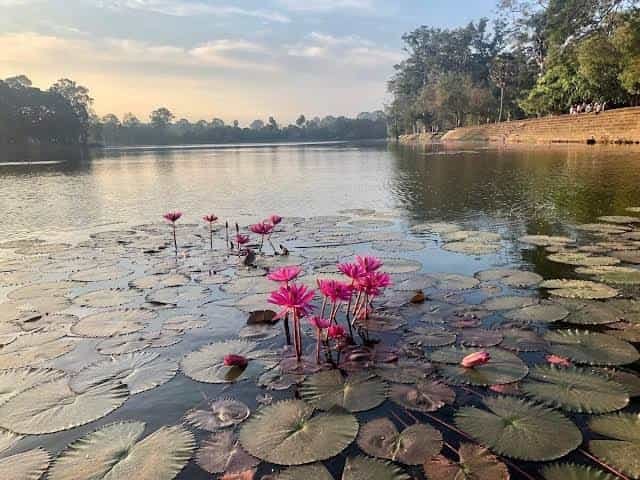
Few people associate Madhya Pradesh with wetland conservation, yet the backwaters feeding Gulawat’s pink-carpeted ponds belong to Yashwant Sagar — a Ramsar-designated Wetland of International Importance since 2022, home to over 200 bird species including the vulnerable sarus crane. Gulawat Lotus Valley itself, often called Asia’s largest lotus valley, sits right where this dam’s waters spread into a network of eucalyptus- and bamboo-lined ponds roughly 25 km from Indore, making it one of the rare Indian destinations where a genuinely photogenic flower spectacle and serious ecological significance overlap in the same 300-acre stretch.
Gulawat Lotus Valley: Quick Facts
| Aspect | Details |
| Location | Gulawat village, Hatod tehsil, Indore district, Madhya Pradesh |
| Distance from Indore City | Approx. 25 km |
| Area | Approx. 300 acres |
| Water Source | Backwaters of Yashwant Sagar Dam (built 1939 on the Gambhir River) |
| Yashwant Sagar Status | Ramsar Wetland of International Importance (designated 2022); Important Bird Area |
| Bird Species Recorded | Approx. 200-239, including the vulnerable sarus crane |
| Fish Species | Approx. 30-39 |
| Entry Fee | Free |
| Nearest Airport | Devi Ahilya Bai Holkar Airport, Indore (approx. 16 km) |
| Nearest Railway Station | Indore Junction |
| Bus Access | Sarwate Bus Stand, Indore |
| Best Time to Visit | July-September (monsoon bloom) and December-February (winter bloom + migratory birds) |
| Ideal Visit Duration | 2-4 hours |
Things to Do at Gulawat Lotus Valley
Between the lotus ponds themselves and the surrounding wetland ecosystem, Gulawat offers more variety than its “quick picnic spot” reputation suggests.
- View the Lotus Beds: The central draw, with pink lotus blooms spread across small ponds and lakes within a dense eucalyptus and bamboo forest — best appreciated on an early morning walk before the flowers begin closing.
- Go Birdwatching: Given Yashwant Sagar’s status as an Important Bird Area, migratory birds arrive here in significant numbers during the breeding season, making this one of the more rewarding casual birdwatching spots near Indore.
- Take a Boat Ride: Basic boating facilities let visitors get closer to the lotus beds than the shoreline paths allow, offering a different vantage point over the ponds.
- Watch the Sunset: Widely regarded as one of Indore’s best sunset spots, with the pink lotus blooms and still water creating a striking backdrop as the light fades.
- Relax on the Bamboo Swings: Simple swings set up within the bamboo forest offer a low-key, family-friendly activity alongside the walking and photography.
- Photograph the Forest and Ponds: Beyond the lotus flowers themselves, the surrounding dense eucalyptus and bamboo cover gives Gulawat a genuinely different visual character from typical Madhya Pradesh countryside.
- Sample Local Snacks: Small vendors near the main entry point sell roasted corn and other simple snacks, particularly popular during the cooler winter months.
Best Time to Visit Gulawat Lotus Valley
Since Gulawat straddles both a seasonal flower bloom and a migratory bird calendar, the ideal timing depends on what you’re most interested in seeing.
- July to September (Monsoon): A particularly strong window for the lotus bloom itself, with fuller water levels and lush surrounding greenery adding to the visual impact.
- December to February (Winter): The second peak bloom period, coinciding with the arrival of migratory birds during their breeding and foraging season, making this the best combined window for both flowers and birdwatching.
- Early Morning (Any Season): Regardless of which window you visit in, arriving early is consistently recommended, since lotus flowers tend to close as the day warms up.
- Summer (March-June): Generally the weakest period for both lotus density and bird activity, so it’s the least recommended stretch if either is your priority.
How to Reach Gulawat Lotus Valley
Given its proximity to Indore, Gulawat is straightforward to reach for anyone based in or visiting the city.
- By Air: Devi Ahilya Bai Holkar Airport in Indore is the nearest airport, roughly 16 km away, with regular domestic connections to major Indian cities.
- By Train: Indore Junction serves as the main railway gateway, well-connected across the country, with the onward journey to Gulawat covered by road.
- By Road from Indore: A roughly 25 km drive via Hatod, typically taking around 45 minutes to an hour depending on traffic and road conditions.
- By Bus: Sarwate Bus Stand in Indore offers a starting point for those relying on local or shared transport rather than a private vehicle.
- Local Transport: Taxis and auto-rickshaws readily cover the Indore-Gulawat stretch, making a private vehicle convenient but not strictly necessary.
The Wetland Behind the Lotus: Yashwant Sagar’s Ecological Importance
Understanding what actually feeds Gulawat’s ponds adds real context to a visit here, since the dam behind it carries genuine conservation weight beyond its role as scenery.
- A Working Reservoir Since 1939: Yashwant Sagar was originally built on the Gambhir River to supply irrigation and drinking water to Indore, a role it still partly serves alongside more recent commercial aquaculture use.
- Ramsar Recognition: Along with Indore’s Sirpur Lake, Yashwant Sagar was designated a Wetland of International Importance under the Ramsar Convention in 2022, reflecting its ecological significance well beyond the local tourism value.
- A Stronghold for the Sarus Crane: The wetland is considered one of central India’s key habitats for this vulnerable species, with winter water recession creating ideal nesting, breeding, and foraging conditions.
- One of Madhya Pradesh’s 19 Important Bird Areas: Alongside its Ramsar status, Yashwant Sagar holds this separate ecological designation, marking it as one of the state’s most significant birding sites, and one of only two IBAs in the Indore region.
- A Living System, Not Just a Backdrop: The lotus beds at Gulawat are essentially a visible expression of a much larger, functioning wetland ecosystem, which is part of why the area supports such consistent bird activity across seasons.
FAQs
Q1. Is Gulawat Lotus Valley the same place as Yashwant Sagar, or are they different destinations?
They’re closely connected but distinct — Yashwant Sagar is the dam and Ramsar-designated wetland itself, while Gulawat Lotus Valley refers specifically to the forested pond area on its backwaters near Gulawat village, which is where most visitors actually go for the lotus flowers.
Q2. Will I actually see migratory birds if I visit primarily for the lotus flowers?
There’s a good chance, especially if you visit during the December-to-February window, since this period overlaps both peak lotus bloom and the migratory bird breeding season, though dedicated birdwatchers should still allow extra time and ideally bring binoculars for the best sightings.
Q3. Is the boat ride necessary to properly experience the lotus valley, or is walking the shoreline sufficient?
Walking the shoreline paths gives a solid overall experience, but a boat ride lets you get considerably closer to the lotus beds themselves, so it’s worth the small additional time if you want a more immersive view rather than just observing from a distance.
Q4. How does visiting in monsoon compare to visiting in winter for someone who can only choose one season?
Monsoon (July-September) offers fuller water levels and a lusher green backdrop around the lotus ponds, while winter (December-February) adds migratory birds to the experience alongside a second strong bloom period — so winter arguably offers more to see overall, while monsoon leans more purely toward the flowers and greenery.