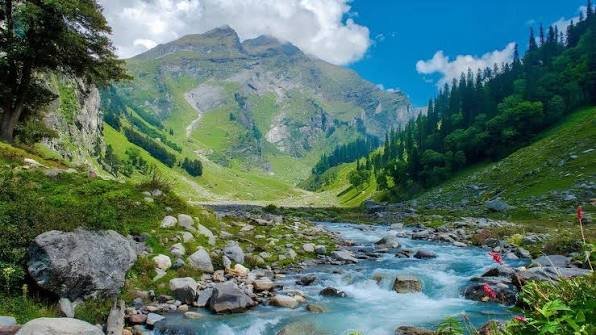
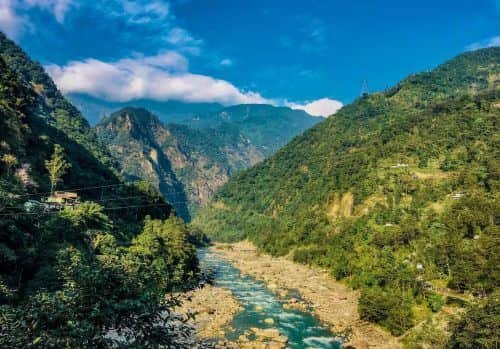
In a country where temples to Krishna and the Pandavas are everywhere, one remote Garhwal village along this trek does something almost unheard of — it worships Duryodhana, the antagonist of the Mahabharata, as its local deity. That village, Osla, sits along the route to Har Ki Dun, a cradle-shaped “hanging valley” tucked into Uttarkashi district at nearly 11,700 feet, flanked by the Swargarohini peaks and reached only by a multi-day trek through the Govind Wildlife Sanctuary. Often called the “Valley of the Gods,” Har Ki Dun combines genuine mythology, alpine meadows, and one of the more approachable moderate treks in the Western Himalayas.
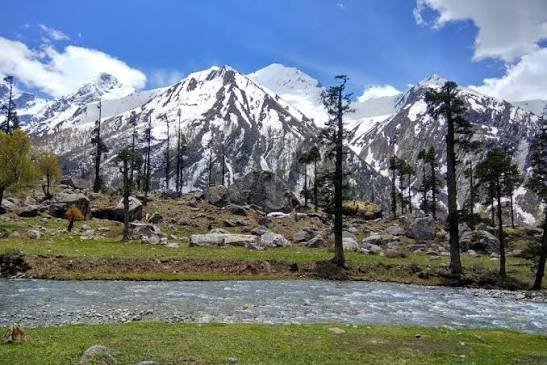
Har Ki Dun (Hanging Valley): Quick Facts
| Aspect | Details |
| Location | Uttarkashi district, Garhwal Himalayas, Uttarakhand |
| Altitude | Approx. 3,556-3,566 metres (11,600-11,700 feet) |
| Base Camp | Sankri village (approx. 1,950 metres) |
| Trek Start Point | Taluka (approx. 12 km drive from Sankri) |
| Trek Distance | Approx. 34-67 km round trip (varies by exact route measured) |
| Trek Duration | 6-7 days (Dehradun to Dehradun) |
| Difficulty | Easy to moderate |
| Distance from Dehradun to Sankri | Approx. 190-210 km (8-10 hours) |
| Nearest Airport | Jolly Grant Airport, Dehradun |
| Nearest Railway Station | Dehradun Railway Station |
| Permit Required | Forest Department permit for Govind Wildlife Sanctuary & National Park |
| Best Time to Visit | March to June and September to November/December |
| Connects To | Baspa Valley via Borasu Pass |
| Nearby Attractions | Ruinsara Lake, Swargarohini peak views, Osla village |
How to Reach Har Ki Dun
Reaching the hanging valley itself requires trekking, but getting to the base camp is a fairly standard, if long, mountain drive from Dehradun.
- By Air: Jolly Grant Airport in Dehradun is the nearest airport, connected to major Indian cities, followed by the road journey to Sankri.
- By Train: Dehradun Railway Station serves as the practical starting point for most trekkers, well-connected to Delhi and other major cities.
- By Road from Dehradun to Sankri: The standard route runs via Mussoorie, Kempty Falls, Purola, and Mori, covering roughly 190-210 km in 8-10 hours, typically by shared jeep, bus, or private taxi.
- From Sankri to Taluka: A short 12 km drive (30-45 minutes), where the road ends and the actual trekking trail begins, following the Supin River toward the interior villages.
- If the Road is Blocked: During monsoon-prone periods, the Sankri-Taluka stretch can occasionally be impassable, requiring trekkers to walk the 12 km on foot instead, adding a full day to the itinerary.
Best Time to Visit Har Ki Dun
Given the valley’s high altitude and the trek’s dependence on the Govind Wildlife Sanctuary’s trail conditions, timing shapes both comfort and accessibility.
- March to June: A strong pre-monsoon window, with milder temperatures and increasingly clear mountain views as summer approaches.
- September to November/December: Widely considered the best overall stretch, offering crisp post-monsoon air, stable trails, and excellent visibility of Swargarohini and the surrounding peaks.
- July to August (Monsoon): Best avoided, since heavy rain increases landslide risk on both the road to Sankri and the trekking trail itself.
- Winter (December-February): The valley is snow-covered and technically accessible to well-prepared trekkers, though this shifts the trip into a considerably more demanding winter trekking experience.
Things to Do on the Har Ki Dun Trek
The trek itself unfolds in stages, each offering a distinct mix of scenery, wildlife, and village culture along the way.
- Trek Through Govind Wildlife Sanctuary: The route passes through this protected area, home to species like musk deer, Himalayan griffon, and black bear, alongside dense coniferous forest.
- Visit Osla Village: One of the trek’s most culturally distinctive stops, known for its Duryodhana temple and locally practiced customs that set it apart from most of Hindu India.
- Walk Along the Supin River: The trail between Taluka and the higher campsites follows this river closely, offering some of the trek’s most scenic and gentle stretches.
- Reach the Har Ki Dun Meadow: The trek’s centrepiece, a flat, cradle-shaped expanse surrounded by ancient moraines and views of hanging glaciers.
- Extend to Ruinsara Lake: For trekkers with extra time, a side route leads to this glacial lake, adding depth to the standard Har Ki Dun itinerary.
- Photograph Swargarohini Peak: Named after the mythological staircase to heaven, this peak dominates views from the valley floor and is a highlight for photographers.
- Spot Alpine Flora and Fauna: The trek’s varied altitude range supports everything from dense forest to open bugyal-style meadows, rewarding those interested in Himalayan biodiversity.
Permits, Culture, and What to Prepare For
A few specifics shape how smoothly the Har Ki Dun trek goes, beyond the standard packing list.
- Forest Permit: Since the trek runs through the Govind Wildlife Sanctuary & National Park, a Forest Department permit is mandatory, arranged either through local operators in Sankri or directly at the Uttarkashi forest office.
- Last Connectivity Points: Purola holds the last reliable ATM before Sankri, while Sankri itself is the last village with stable mobile signal, so plan cash and communication needs accordingly.
- Respect Local Customs: Osla village’s distinct traditions, including its Duryodhana worship, are worth approaching with genuine curiosity and respect rather than treating as a mere photo stop.
- Gear for Variable Altitude: Since the trek spans roughly 1,900 to 3,500+ metres, layered clothing, sturdy waterproof trekking shoes, and a good sleeping bag matter more here than on lower-altitude walks.
- Guides and Group Treks: While the trail is well-established and considered easy-moderate, first-time high-altitude trekkers often benefit from joining an organized group or hiring local support for pacing and permit logistics.
FAQs
Q1. Is the Har Ki Dun trek suitable for a first-time trekker with no high-altitude experience?
Yes, it’s generally rated easy to moderate and considered one of the more beginner-friendly multi-day Himalayan treks, though reasonable fitness and proper acclimatization across the 6-7 day itinerary still matter.
Q2. Do I need a permit just to visit Sankri, or only for the actual trek into the sanctuary?
Sankri itself doesn’t require a special permit, but since the trekking route passes through the Govind Wildlife Sanctuary & National Park, a Forest Department permit is mandatory once you begin the trek from Taluka onward.
Q3. Why do trek distances for Har Ki Dun vary so much across different operators (34 km vs 47 km vs 67 km)?
The variation comes down to exactly where each operator measures from — some count only from Taluka, others include the Sankri-Taluka stretch or extensions like Ruinsara Lake, so it’s worth clarifying the specific itinerary and distance with your chosen operator rather than assuming a fixed figure.
Q4. Can I visit Osla village and the Duryodhana temple without doing the full trek to Har Ki Dun?
Osla sits along the main trekking route itself, so reaching it still requires trekking from Taluka, though it comes earlier in the itinerary than the final Har Ki Dun meadow, making it accessible even for those planning a shorter version of the trek.