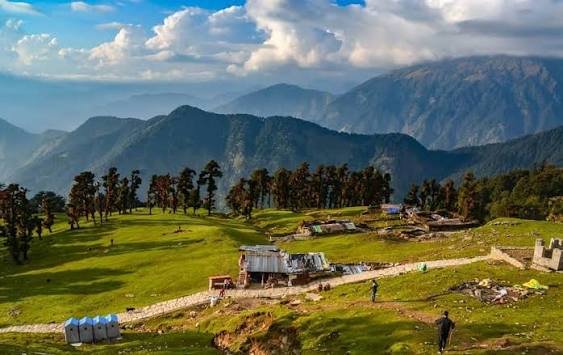
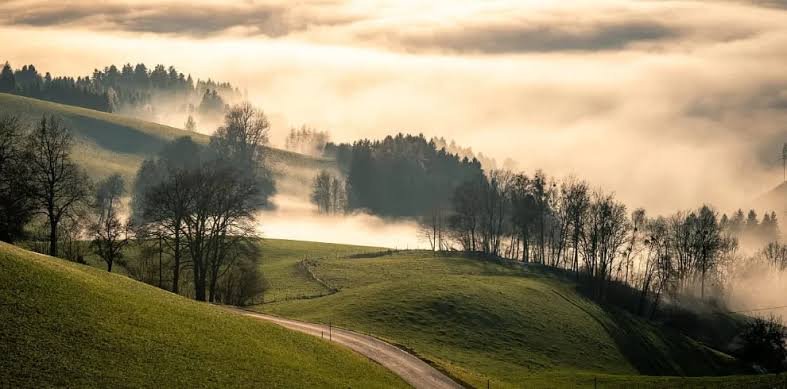
While most of India is still fast asleep, a small meadow near the India-China-Myanmar trijunction in Arunachal Pradesh’s Anjaw district catches the country’s very first rays of sunlight — sometimes as early as 4 AM in summer. Dong Valley, just beyond the remote town of Walong, holds the distinction of being the first inhabited place in India to greet the sun each day, a fact that draws a small but growing number of travellers willing to trek through darkness to witness it. Home to the Meyor tribe and framed by the Lohit River, snow-capped peaks, and pine forests, Dong Valley remains one of India’s most remote and least commercialised sunrise destinations.

Dong Valley: Quick Facts
| Aspect | Details |
| Location | Anjaw district, Arunachal Pradesh (near India-China-Myanmar trijunction) |
| Nearest Town | Walong (approx. 6-7 km) |
| Local Community | Meyor tribe |
| River | Lohit River |
| Claim to Fame | First inhabited place in India to receive sunrise each day |
| Sunrise Timing | Approx. 4:00-4:30 AM (summer); approx. 5:00 AM (winter) |
| Trek Distance from Walong | Approx. 8-10 km (round trip approx. 16-20 km) |
| Trek Start Time | Approx. 1:00-2:00 AM to reach viewpoint by sunrise |
| Trek Duration | Approx. 90 minutes to 2 hours one way |
| Best Time to Visit | October to April (some sources also cite April-June and September-November) |
| Avoid | June to September (monsoon, landslide risk near Walong and Kibithu) |
| Permit Required | Inner Line Permit (mandatory) |
| Nearest Airport | Dibrugarh Airport, Assam |
| Nearest Railway Station | Tinsukia Junction, Assam (approx. 350 km from Walong) |
| Nearby Attraction | Walong War Memorial (1962 Indo-China War) |
The Sunrise Trek: What to Expect
The trek itself is the central experience at Dong Valley, since there’s no way to drive directly to the sunrise viewpoint.
- Starting Point: The trek begins from Walong or a nearby hamlet like Tilam, typically a short drive from Walong town.
- Departure Time: Most trekkers set out between 1:00 and 2:00 AM to reach the viewpoint before the sun rises, guided by local Meyor community members familiar with the route.
- Trail Conditions: The path winds through fragrant pine forests, open wild grass meadows, and a hanging suspension bridge over the Lohit River — a genuinely thrilling crossing in the dark.
- The Viewpoint: A vast open meadow near Dong village serves as the main sunrise-watching spot, offering a clear line of sight as the first rays touch the confluence of the Lohit and Sati rivers.
- A Piece of History: Along the way, trekkers pass a bunker from the 1962 Indo-China War, adding a layer of historical significance to the trek.
- The Reward: As the sun rises, snow-capped peaks turn golden with the early light, an experience many describe as the highlight of an Arunachal Pradesh trip.
Best Time to Visit Dong Valley
Given the trek’s demanding nature and the region’s weather-sensitive access roads, timing significantly affects both comfort and visibility.
- October to April: Broadly the most recommended window across sources, offering clearer skies and better chances of an unobstructed sunrise view, particularly November to January for the earliest and clearest sunrises.
- April to June: A warmer alternative, with less cold to contend with during the pre-dawn trek, though skies can be hazier than in winter months.
- September to November: Another solid window, combining reasonably clear weather with more comfortable trekking temperatures than deep winter.
- June to September (Monsoon): Strongly discouraged, since heavy rainfall increases landslide risk on roads around Walong and Kibithu, potentially cutting off access entirely.
How to Reach Dong Valley
Reaching Dong Valley is a genuine multi-stage journey, given its position in one of India’s most remote border districts.
- By Air: Dibrugarh Airport in Assam is the nearest airport, with the onward journey to Arunachal Pradesh continuing entirely by road.
- By Train: Tinsukia Junction in Assam is the nearest railway station, roughly 350 km from Walong, after which taxis or shared jeeps continue the journey.
- By Road: The common route runs Dibrugarh (or Tinsukia) to Tezu, then onward to Walong, with roads becoming progressively rougher and more mountainous as you approach the Arunachal border region.
- From Walong to Dong: The final stretch from Walong is only reachable on foot, via the roughly 8-10 km trek described above, since no road connects directly to the sunrise viewpoint.
- Permits: An Inner Line Permit is mandatory for all Indian travellers entering this part of Arunachal Pradesh, with foreign nationals requiring additional special permits and generally advised to travel with a guide.
Practical Tips for Visiting Dong Valley
A few specifics matter significantly more here than at most Indian tourist destinations, given the remoteness and trek involved.
- Arrange your Inner Line Permit well in advance, since processing and travel logistics to this remote district take time to coordinate.
- Stay overnight in Walong, Tezu, or Hayuliang before attempting the trek, since starting fresh from a closer base makes the 1-2 AM departure far more manageable.
- Hire a local Meyor guide for the trek, given the darkness, steep sections, and hanging bridge crossing involved.
- Carry warm clothing, a flashlight, and basic trekking gear, since temperatures drop sharply in the pre-dawn hours regardless of season.
- Expect very limited mobile network coverage throughout the region, so inform others of your itinerary in advance and carry physical maps or directions as backup.
FAQs
Q1. Is the Dong Valley sunrise trek suitable for someone without prior trekking experience?
It’s rated moderate to challenging given the steep sections, darkness, and hanging bridge crossing, so reasonable fitness and hiring a local guide are strongly advisable rather than attempting it as a casual first trek.
Q2. Do I really need to start the trek at 1-2 AM, or can I leave later and still catch the sunrise?
Given the 90-minute-to-2-hour trek duration and the goal of reaching the viewpoint before first light, starting later risks missing the actual sunrise moment, so the early departure time is genuinely necessary rather than a suggested buffer.
Q3. Is Dong Valley accessible for a quick 2-day trip, or does it need more time?
Given the remote location and multi-stage travel from Dibrugarh or Tinsukia through Tezu and Walong, a realistic itinerary needs at least 4-5 days total, including travel time, an overnight stay before the trek, and the return journey.
Q4. What happens if weather conditions are poor on the morning I planned for the sunrise trek?
Since cloud cover can obscure the sunrise even when the trek itself is completed, it’s worth building a buffer day into your itinerary if possible, allowing a second attempt should the first morning’s visibility be poor.