Long before it became a favourite Himachal road trip, the stretch of NH5 running through Kinnaur was known as the Hindustan-Tibet Road, an old trade route linking the plains to Tibet across some of the most dramatic terrain in the Sutlej River valley. Today, Kinnaur district still carries that frontier character — apple orchards climbing impossibly steep slopes, Hindu-Buddhist villages that shift between the two faiths from one settlement to the next, and Kinner Kailash, an 80-foot natural rock pillar revered as a Shivalinga, drawing pilgrims on a demanding multi-day trek. Anchored by Reckong Peo and its former capital Kalpa, Kinnaur remains one of Himachal Pradesh’s most rewarding districts to explore slowly.
Kinnaur Valley: Quick Facts
| Aspect | Details |
| Location | Kinnaur district, Himachal Pradesh, along the Sutlej River (NH5) |
| District Headquarters | Reckong Peo, approx. 2,290 metres (7,513 feet) |
| Former Headquarters | Kalpa, approx. 2,960 metres (9,711 feet), 14 km from Reckong Peo |
| Distance from Shimla | Approx. 235 km (Reckong Peo) to 260 km (Kalpa) |
| Distance from Delhi | Approx. 555-594 km |
| Distance from Chandigarh | Approx. 321-340 km |
| Permit Required | None for Indian nationals in core Kinnaur areas; valid photo ID mandatory |
| Best Time to Visit | April to June and September to October/November |
| Known For | Kinner Kailash, apple orchards, Kinnauri culture, Sangla-Chitkul extension |
| Key Villages | Kalpa, Reckong Peo, Sangla, Chitkul, Nako |
| Nako’s Distance from Kalpa | Approx. 119 km (gateway toward Spiti) |
| Ideal Trip Duration | 5-8 days for a full Kinnaur circuit |
How to Reach Kinnaur Valley
Kinnaur’s access is entirely road-based, following the Sutlej River along NH5 from Shimla, with no rail or air connectivity within the district itself.
- By Air: The nearest airport is Shimla, followed by a full road journey; there’s no airstrip within Kinnaur district.
- By Train: Shimla Railway Station, connected to Kalka and onward to Delhi, serves as the nearest rail link, roughly 235-260 km from Kinnaur’s main towns.
- By Road from Shimla: The standard route runs via Narkanda, Rampur, and Karcham to Reckong Peo and Kalpa, covering 235-260 km in 7-9 hours depending on road conditions.
- By Road from Delhi: A longer haul of roughly 555-594 km, typically split across two days with an overnight halt near Shimla or Narkanda.
- By Bus: Multiple daily HRTC buses run from Shimla to Reckong Peo (around 13 departures, first around 3:25 AM), with fares roughly ₹430 (ordinary) to ₹650 (Himmani Deluxe) for the journey.
- Extending to Nako and Spiti: From Kalpa, Nako lies a further 119 km, serving as the natural gateway for travellers continuing their Kinnaur trip into Spiti Valley via Tabo and Kaza.
Best Time to Visit Kinnaur Valley
Kinnaur’s high-altitude villages and monsoon-exposed roads make timing genuinely important for both comfort and safety.
- April to June: The season’s start, with roads fully open by April, cool but pleasant temperatures (10-25°C in Kalpa), and clear views of Kinner Kailash against blue skies — the best window for first-time visitors.
- September to Mid-October: Widely considered the most beautiful stretch, coinciding with the apple harvest, crisp clear weather, and roads freshly repaired after monsoon maintenance.
- Late October to November: Winter chill begins setting in, particularly in mornings and evenings, though the valley remains accessible and increasingly quiet.
- July to August (Monsoon): Generally discouraged, since NH5 and connecting roads are prone to landslides during this period.
- Winter (December-March): Experienced hill drivers can still reach Kalpa and Chitkul, with good road surfaces but sharp curves above the Sutlej gorge — solo backpackers report success even in November and March with careful driving.
Things to Do in Kinnaur Valley
Kinnaur’s attractions span heritage villages, a significant pilgrimage site, and the broader Sangla-Chitkul extension that most itineraries build around.
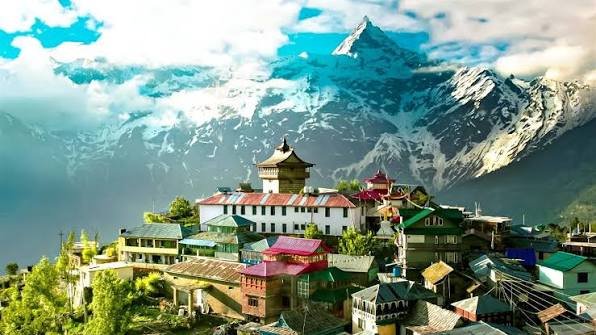
- Explore Kalpa: A heritage village overlooking the Sutlej River and Kinner Kailash range, historically significant since British Governor General Lord Dalhousie’s 19th-century visit, and now known for its apple orchards and homestays.
- Base at Reckong Peo: The district headquarters and practical hub for supplies, transport connections, and the starting point for pilgrims trekking toward Kinner Kailash.
- Trek Toward Kinner Kailash: A demanding three-day trek to view the sacred 80-foot rock pillar, with a separate, more challenging clockwise Parikrama circumambulation trek running from Charang village to Chitkul.
- Visit Nako: A high-altitude village roughly 119 km beyond Kalpa, closer to the Spiti border, offering a quieter, more remote extension for those continuing further into the region.
- Extend to Sangla and Chitkul: A natural addition to any Kinnaur itinerary, taking in the Baspa Valley’s apple orchards, Kamru Fort, and Chitkul, the last inhabited Indian village on this particular route.
- Sample the Apple Economy: Kinnaur’s orchards are central to the local economy, and visiting during the September-October harvest offers a genuine look at this agricultural tradition alongside the scenery.
- Photograph the Old Hindustan-Tibet Road: The historic route itself, hugging cliffs above the Sutlej gorge, remains one of the most dramatic and photographed drives in Himachal Pradesh.
Choosing Your Base: Kalpa vs Reckong Peo vs Sangla
Since Kinnaur spans several distinct villages, deciding where to actually stay shapes your entire trip.
- Kalpa: The preferred base for most travellers wanting “to stay in Kinnaur” — higher altitude, better views of Kinner Kailash, established homestays, and closer proximity to apple orchards, just 14 km above Reckong Peo.
- Reckong Peo: More practical for logistics (transport connections, supplies), but generally less scenic than Kalpa, making it better suited as a transit stop than an extended stay.
- Sangla: A strong alternative base if the Baspa Valley and Chitkul day trip are your priority, offering its own distinct apple-country charm separate from the main Sutlej valley towns.
- Nako: Best reserved for travellers extending toward Spiti Valley, since its remoteness from Kalpa (119 km) makes it less convenient as a standalone base for a shorter Kinnaur-only trip.
- For a Kinnaur-to-Spiti Circuit: Start at Kalpa or Sangla, then continue through Reckong Peo onward to Nako and finally into Spiti via Tabo and Kaza — a natural progression rather than a backtracking route.
FAQs
Q1. Do I need a permit to visit Kinnaur, or is a photo ID sufficient for Indian travellers?
Indian nationals don’t need a special permit for core Kinnaur destinations like Kalpa, Reckong Peo, Sangla, and Chitkul — only a valid photo ID is required, though extending into more remote border-adjacent areas may involve additional checks.
Q2. Should I base myself in Kalpa or Reckong Peo for my Kinnaur trip?
Kalpa is generally the better choice for most travellers, since it offers superior views of Kinner Kailash, established homestays, and proximity to apple orchards, while Reckong Peo works better as a practical transit stop given its role as the district’s logistical hub.
Q3. Is it possible to visit Kinnaur in winter, or should I stick strictly to the April-November window?
While April-June and September-November are the recommended windows, experienced hill drivers can still reach Kalpa and Chitkul in winter months like November or March, provided they’re comfortable navigating sharp curves along the Sutlej gorge and check current road conditions beforehand.
Q4. How should I plan my time if I want to cover both the Sutlej valley (Kalpa, Reckong Peo) and the Baspa valley (Sangla, Chitkul) in one trip?
Most itineraries base a few nights in Kalpa first, then continue to Sangla (about a day’s drive) for the Baspa valley extension, treating both as complementary halves of a single Kinnaur circuit rather than separate trips — a 5-8 day overall itinerary comfortably covers both.