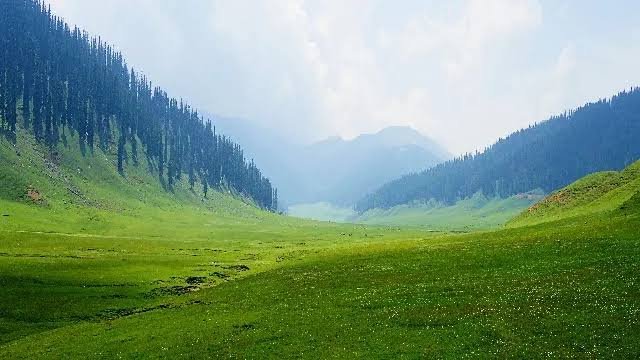
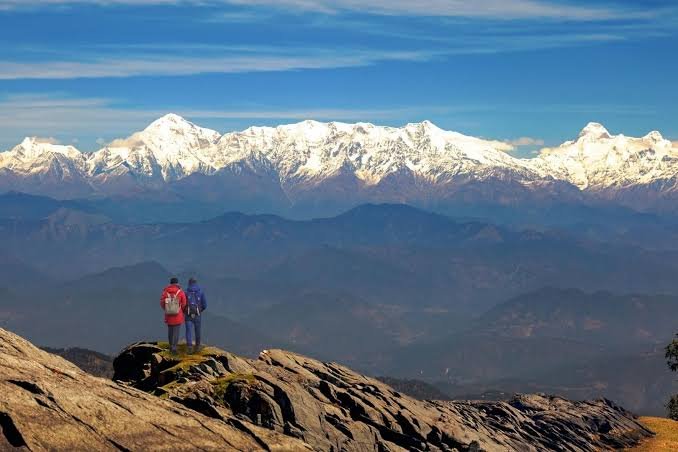
Unlike most Uttarakhand destinations built around a town or village, Binsar is entirely a forest reserve — 45 square kilometres of dense oak and rhododendron spread across the Jhandi Dhar ridge in Almora district, with no permanent settlement inside its boundaries at all. What draws visitors here is Zero Point, the sanctuary’s highest spot, where a short forest walk opens onto a genuinely rare panorama: Nanda Devi, Trishul, Kedarnath Peak, and Shivling all visible in a single sweep on a clear day. Established as a wildlife sanctuary in 1988, Binsar has since become one of Kumaon’s most rewarding combinations of birdwatching, quiet trekking, and Himalayan viewpoint scenery.
Binsar Valley: Quick Facts
| Aspect | Details |
| Location | Almora district, Kumaon Himalayas, Uttarakhand |
| Established | 1988 |
| Area | Approx. 45 sq km |
| Altitude Range | Approx. 900-2,500 metres |
| Distance from Almora | Approx. 24-33 km |
| Distance from Nainital | Approx. 88-95 km |
| Nearest Railway Station | Kathgodam (approx. 120 km) |
| Nearest Airport | Pantnagar (approx. 150 km) |
| Entry Fee | Approx. ₹150 (Indian adults), ₹75 (students), ₹600-650 (foreigners) |
| Vehicle Entry Fee | Approx. ₹250-800, depending on vehicle size |
| Timings | Generally 6:00 AM to 6:00/7:30 PM (varies by source) |
| Best Time to Visit | February to April and October to November |
| Known For | Zero Point viewpoint, birdwatching, dense oak-rhododendron forest |
| Ideal Duration | Half-day to full day |
How to Reach Binsar Valley
Since Binsar has no rail or air link of its own, reaching it always means routing through Almora first, followed by a scenic but occasionally rough forest drive.
- By Road from Almora: The most direct approach, covering roughly 24-33 km, taking around an hour by taxi or private vehicle.
- By Road from Nainital: A longer stretch of approximately 88-95 km, making it feasible to combine Binsar with a broader Kumaon circuit that includes Nainital.
- By Train: Kathgodam is the nearest railway station, roughly 120 km away, well-connected to Delhi and other major cities, with taxis covering the remaining distance.
- By Air: Pantnagar Airport, about 150 km from Binsar, is the nearest airstrip, with limited flight frequency compared to major hubs.
- Private Vehicle Recommended: A private vehicle in good condition is essentially necessary to reach Binsar, since the roads inside the sanctuary can be narrow, single-lane, and occasionally in poor repair — a careful, experienced driver matters more here than on standard hill roads.
- From the Entry Gate: Once inside, vehicles are typically parked near the KMVN (state tourism) property, from where visitors proceed on foot toward Zero Point.
Best Time to Visit Binsar Valley
Since Binsar’s appeal splits between mountain views and forest birdlife, the ideal timing shifts slightly depending on what you’re prioritizing.
- October to November: A strong window for clear Himalayan visibility from Zero Point, with cool, comfortable temperatures around 23°C and reduced haze compared to summer.
- February to April: Equally recommended, particularly for catching the sanctuary’s rhododendrons in full bloom during March-April, alongside good wildlife and bird sighting conditions.
- October to March (Broader Winter Window): Cited by several sources as ideal for the clearest mountain peak visibility overall, since skies tend to stay sharpest during these cooler, drier months.
- Monsoon (July-September): Generally the least recommended stretch, given slippery forest trails and reduced visibility, though the forest itself turns notably lush and green.
Things to Do in Binsar Valley
Binsar’s activities centre almost entirely around its forest trails, viewpoint, and rich birdlife, offering a genuinely peaceful alternative to more commercial Uttarakhand hill stations.
- Trek to Zero Point: The sanctuary’s signature activity, a manageable 1.5-3 km forest walk (roughly 2-3 hours depending on pace and starting point) leading to sweeping views of Nanda Devi, Trishul, Kedarnath Peak, Shivling, and other Himalayan giants on clear days.
- Go Birdwatching: Binsar’s dense oak forest supports a genuinely rich variety of species, earning it an informal reputation as “Binsar Bird Sanctuary” among serious birders.
- Take a Guided Forest Walk: Beyond Zero Point, half-day and full-day guided treks explore deeper into the sanctuary’s oak and rhododendron cover, with local guides available at the entrance or through guesthouses.
- Watch Sunrise or Sunset: Binsar is considered one of Uttarakhand’s better spots for golden-hour Himalayan views, with the changing light adding real drama to the mountain panorama.
- Cycle Through the Sanctuary: For those with the stamina, cycling along the forest roads offers a slower, more immersive way to experience Binsar’s wildlife and scenery.
- Visit Nearby Kasar Devi Temple: A well-known spiritual and scenic spot near Almora, offering its own panoramic Himalayan views and a peaceful meditation setting.
- Stop at Chitai Golu Devta Temple: Dedicated to the Kumaoni god of justice, this temple is famous for the thousands of bells devotees have offered over the years — a distinctive cultural stop en route to or from Binsar.
Permits, Fees, and Guides: What You’ll Actually Pay
Since Binsar’s fee structure and guide costs vary noticeably across sources, it’s worth understanding roughly what to budget for a visit.
- Entry Fee: Approximately ₹150 per Indian adult (often valid for a few days), ₹75 for students with valid ID, and ₹600-650 for foreign nationals.
- Vehicle Charges: Ranging from around ₹250 for small vehicles up to ₹800-1,050 for heavier vehicles, charged separately from personal entry fees.
- Guide Fees: Hiring a local guide, recommended given how easy it is to lose the trail in this remote forest, typically costs around ₹250 for the shortest Zero Point route, ₹500 for a half-day trek, and ₹1,000 for a full-day exploration.
- Camera Fees: Some sources note an additional camera fee may apply, so it’s worth confirming current charges at the entry gate.
- Where to Hire a Guide: Guides can be arranged either through your guesthouse or directly at the sanctuary office near the Ayarpani entrance point.
FAQs
Q1. Is Binsar Wildlife Sanctuary suitable for spotting large wildlife like tigers or leopards?
Not reliably — while leopards and other wildlife do inhabit the sanctuary, most visitors report seeing mainly langurs and birdlife rather than larger predators, so it’s better approached as a scenic forest and birding destination than a guaranteed big-game wildlife experience.
Q2. Do I need to hire a guide for the Zero Point trek, or can I navigate it independently?
While the main Zero Point trail is relatively well-used and manageable independently, hiring a guide (a modest additional cost) is genuinely recommended given the forest’s remoteness, particularly if you’re considering a longer half-day or full-day trek beyond the standard route.
Q3. Is the road inside Binsar Wildlife Sanctuary safe for a regular car, or do I need a 4×4?
A regular car can generally manage the drive, but road conditions inside the sanctuary are sometimes narrow, single-lane, and occasionally poorly maintained, so a careful driver and a vehicle in good condition matter more here than requiring a dedicated 4×4.
Q4. How much time should I realistically plan for a Binsar day trip from Almora?
A half-day to full-day plan works well — allow about an hour for the drive each way, plus 2-3 hours for the Zero Point trek and time at the viewpoint, making it a comfortable single-day excursion from Almora without needing an overnight stay, though staying in or near the sanctuary offers a more relaxed pace.