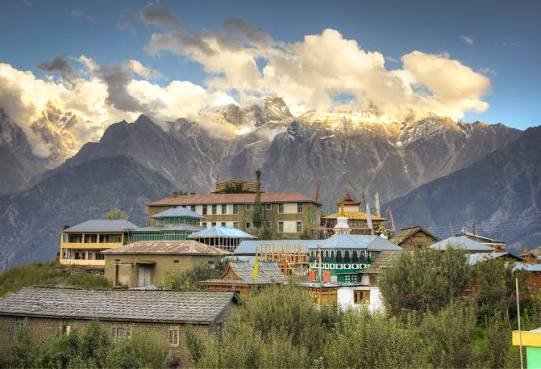
Every clear morning in Kalpa, hotel balconies and apple orchards fill with people waiting for the same thing: sunrise breaking over the jagged Kinner Kailash range, its peaks catching the first light while the village below still sits in shadow. This former district capital of Kinnaur, perched above Reckong Peo along the old Hindustan-Tibet Road, has built its entire tourist identity around that view — but Kalpa offers considerably more than a single sunrise photo, from centuries-old Kinnauri wood-and-stone temples to a genuinely memorable walk to the neighbouring village of Roghi.
Kalpa Valley: Quick Facts
| Aspect | Details |
| Location | Kinnaur district, Himachal Pradesh |
| Altitude | Approx. 2,960 metres (9,711 feet) |
| Distance from Reckong Peo | Approx. 14 km (30 minutes) |
| Distance from Shimla | Approx. 235-260 km (7-8 hours) |
| Historical Note | Former district headquarters of Kinnaur, historically called Chini |
| Best Time to Visit | April to June and September to October |
| Key Attractions | Kinner Kailash viewpoint, Narayan Nagini Temple, Roghi Village, Suicide Point |
| Apple Harvest Season | August to October |
| Roghi Cliff Road | Open April to October; impassable in winter |
| Ideal Visit Duration | 2-3 nights |
| Accommodation | Established homestays and hotels (more developed than most Kinnaur villages) |
Things to Do in Kalpa
Kalpa’s own village and its immediate surroundings offer a genuinely rich half-day-to-full-day itinerary without needing to travel far.
- Watch Sunrise Over Kinner Kailash: Kalpa’s signature experience, best viewed from an apple orchard or hotel balcony as the sacred peak range lights up before the valley below.
- Visit Narayan Nagini Temple: Located in the heart of old Kalpa (historically Chini village), this ancient temple showcases classic Kinnauri wood-and-stone architecture, carved wooden panels, and a pagoda-style tower — one of the oldest and most significant temples in the valley.
- Explore Kalpa Monastery (Hu-Bu-Lan-Kar Gompa): A serene Buddhist monastery offering its own views of the Kinner Kailash range, reflecting the valley’s blended Hindu-Buddhist religious character.
- Visit Ragunath Temple: Sitting close to Narayan Nagini within the village, this temple pairs naturally with a morning heritage walk through Kalpa’s older lanes.
- Trek to Chakka Meadows: A more demanding excursion, with trails starting from a point on the Kalpa-Roghi road near Chini village, roughly 10 km from Reckong Peo, rewarding hikers with alpine meadow scenery beyond the village.
- Walk Old Kalpa Village: A slower, unhurried lane-by-lane walk through the original village core, taking in wood carvings, small shrines, and everyday Kinnauri life alongside the newer tourist-facing parts of town.
- Visit Sapni Fort: A short drive from Kalpa, offering historical intrigue among its ruins for those wanting more than temples and viewpoints.
The Roghi Village Excursion: Kalpa’s Best Half-Day Trip
Since this single excursion is consistently rated Kalpa’s most memorable activity, it deserves its own dedicated plan rather than being treated as a quick stop.
- Two Ways In: Roghi can be reached via a flat, roughly 45-minute walking path through apple and apricot orchards, or via an 8 km cliff-hugging road that has earned a reputation as one of the more intimidating drives in the Indian Himalaya.
- The Recommended Approach: Walk to Roghi via the calm orchard footpath, spend an hour exploring the village, then have your driver pick you up and return to Kalpa via the cliff road — this way you experience both the peaceful walk and the dramatic drive without repeating the cliff road twice.
- What Roghi Offers: A quieter, older Kinnauri village than Kalpa itself, with traditional wooden houses, a small temple dedicated to Roghi Mata, apple orchards, and a small, primarily Buddhist community that homestays occasionally host in summer.
- Suicide Point: A cliff-edge viewpoint about 3 km from Kalpa along the Roghi road — despite its dramatic name (referring to the steep geometry of the cliff face, not any specific recorded incident), it’s essentially a brief 5-15 minute photo stop with sweeping views into the Sutlej gorge, best combined with, rather than treated as separate from, the Roghi visit.
- Afternoon Timing: The light on Kinner Kailash from Roghi in the afternoon is considered some of the best in Kinnaur, so timing your walk to arrive at the village in early-to-mid afternoon pays off.
- Seasonal Access: The cliff road to Roghi is only open roughly April to October; in winter, only the village walk (weather permitting) remains a realistic option, and the road becomes fully impassable.
Best Time to Visit Kalpa
Since several of Kalpa’s key activities depend on road access and orchard conditions, timing shapes what’s realistically available during your visit.
- April to June: Roads fully open, comfortable daytime temperatures, and clear Kinner Kailash views — the best window for combining sightseeing with the Roghi excursion.
- September to October: Equally strong, with the added bonus of apple harvest season bringing orchards into full, colourful productivity, plus generally better road conditions after monsoon repairs.
- July to August: Manageable but wetter, with occasional monsoon-related road disruption on the more exposed stretches like the Roghi cliff road.
- Winter (November-March): The Roghi cliff road becomes impassable, limiting activities largely to the Kinner Kailash sunrise view and a walk through old Chini village, so winter visitors should adjust expectations accordingly.
How to Reach Kalpa
Kalpa sits just above Reckong Peo, making it an easy final stretch once you’ve reached Kinnaur district via the standard Shimla route.
- By Road from Shimla: The standard route runs via Narkanda, Rampur, and Karcham to Reckong Peo, then a further 14 km climb to Kalpa, covering roughly 235-260 km in 7-8 hours.
- From Reckong Peo: A short, well-paved 14 km drive taking about 30 minutes, making Reckong Peo (with its bus and taxi connections) the practical last stop before Kalpa.
- By Bus: HRTC buses run from Shimla to Reckong Peo multiple times daily, with local taxis covering the final stretch up to Kalpa.
- No Rail or Air Link: Kalpa has neither a railway station nor an airport of its own; Shimla serves as the nearest practical rail connection, roughly 235-260 km away.
FAQs
Q1. Should I drive to Roghi Village directly, or is the walking path a better first choice?
Walk the orchard footpath to Roghi first (about 45 minutes, no cliff road involved), spend time in the village, and then have your vehicle meet you there for the drive back via the cliff road with a Suicide Point stop — this combines the calmer approach with the dramatic drive rather than choosing one over the other.
Q2. Is Suicide Point worth visiting on its own, without continuing to Roghi Village?
Not really — most experienced visitors describe it as a brief 5-15 minute photo stop, with the real reward being Roghi village itself and its afternoon Kinner Kailash views, so it’s best treated as a stop along the way rather than a standalone destination.
Q3. Can I visit Roghi Village in winter, or is it completely cut off?
The 8 km cliff road becomes impassable in winter, so if visiting between November and March, the village becomes difficult to reach; your Kalpa activities during this period should focus on the Kinner Kailash sunrise view and the old Chini village walk instead.
Q4. How much time should I set aside specifically for the Kalpa-Roghi excursion?
Plan for at least half a day — roughly 45 minutes to an hour for the orchard walk in, an hour exploring Roghi village itself, and 30-45 minutes for the return cliff-road drive with a stop at Suicide Point, rather than trying to rush it into a shorter window.