Temperatures at Death Valley have climbed past 56°C in recorded history, making it the hottest place on Earth and the driest spot in North America — yet this same stretch of desert, straddling the California-Nevada border, draws over a million visitors a year who come specifically to stand at its lowest point, just 86 metres below sea level. For Indian travellers already planning a US West Coast trip or a Las Vegas stopover, Death Valley National Park is an easy, striking detour, though getting the season right matters more here than at almost any other national park in the world.
Death Valley: Quick Facts
| Aspect | Details |
| Location | Southeastern California, extending into Nevada |
| Status | Largest national park in the contiguous United States |
| Lowest Point | Badwater Basin, approx. 86 metres (282 feet) below sea level |
| Distance from Las Vegas | Approx. 120 miles (2-2.5 hours by road) |
| Distance from Los Angeles | Approx. 270-280 miles (4.5-5 hours by road) |
| Nearest Airport | Harry Reid International Airport, Las Vegas |
| Best Time to Visit | October to April |
| Summer Temperatures | Can exceed 50°C (120°F+) |
| Winter Temperatures | Approx. 15-25°C |
| Entrance Fee | Approx. $30 per vehicle (valid 7 days); $55 annual pass |
| Reservations Required | None; self-serve pay stations at entry points |
| Main Hub | Furnace Creek (visitor center, lodging, fuel) |
| Ideal Visit Duration | 1-2 days |
| Key Attractions | Badwater Basin, Zabriskie Point, Artist’s Palette, Dante’s View, Mesquite Flat Sand Dunes |
Best Time to Visit Death Valley
Unlike most destinations where “best time” is a matter of comfort, timing at Death Valley is genuinely a safety consideration given how extreme its summer heat gets.
- October to April: The recommended window overall, with daytime temperatures manageable enough for hiking and general sightseeing.
- November to March: Often considered the sweet spot, with pleasant daytime conditions and notably cooler nights, sometimes even dropping below 15°C.
- March to May (Spring): A popular period, especially in wetter years when desert wildflowers bloom, though this also brings peak crowds and higher accommodation prices.
- May to September (Summer): Strongly discouraged for casual visitors, since daytime temperatures regularly exceed 45-50°C, making outdoor activity between noon and 4 PM genuinely dangerous.
How to Reach Death Valley
Despite its remote reputation, Death Valley is one of the more accessible national parks in the western United States, reachable via well-paved highways without any permits or shuttle requirements.
- From Las Vegas: The most common approach, roughly 120 miles away and taking about 2-2.5 hours on a straightforward paved route, making it the easiest gateway for most international visitors.
- From Los Angeles: A longer but still manageable drive of around 270-280 miles, taking approximately 4.5-5 hours, often via Bakersfield or through Baker.
- By Air: Harry Reid International Airport in Las Vegas is the nearest major airport with strong international connectivity, followed by a rental car for the onward drive; Los Angeles International Airport (LAX) is a second option for those combining the trip with a broader California itinerary.
- Entry Points: The park has multiple paved entrances — from the east via Death Valley Junction, the west via Panamint Springs, and the south via Shoshone — with no reservation or timed-entry system required at any of them.
- Rental Car Suitability: A standard rental car handles the main paved routes without issue; four-wheel drive is only necessary for specific unpaved backcountry roads within the park.
Things to Do at Death Valley
Most visitors, especially those on a day trip from Las Vegas, focus on a handful of accessible highlights along the park’s main highway.
- Visit Badwater Basin: North America’s lowest point, a vast salt flat that’s the park’s most iconic and photographed stop.
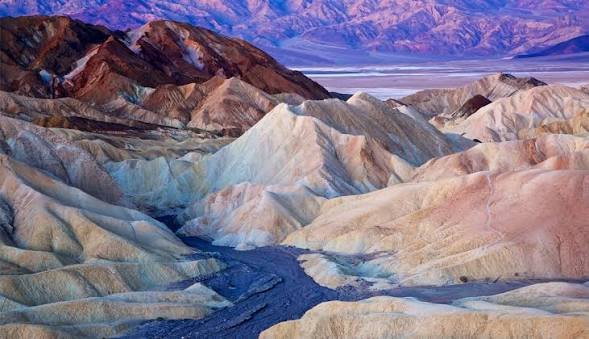
- Watch Sunrise or Sunset at Zabriskie Point: A short walk leads to sweeping views over eroded badlands, particularly striking in early morning or late afternoon light.
- Explore Artist’s Palette: A scenic drive through hills streaked with naturally occurring mineral colours, best visited in the softer light of late afternoon.
- Catch Panoramic Views from Dante’s View: A high-elevation viewpoint overlooking Badwater Basin, offering a dramatic contrast between the valley floor and surrounding mountains.
- Walk the Mesquite Flat Sand Dunes: Rolling desert dunes near Stovepipe Wells, popular for both photography and a short, easy walk.
- Stargaze at Night: Death Valley’s minimal light pollution makes it one of the best stargazing spots in the region, especially away from Furnace Creek’s lights.
- Stop at Furnace Creek Visitor Center: The park’s main hub, useful for maps, ranger advice, and refuelling before continuing deeper into the park.
Practical Tips for Visiting Death Valley
A few precautions matter more here than at most national parks, given the extreme desert conditions.
- Carry significantly more water than you think you’ll need, since dehydration risk is genuinely high even during cooler months.
- Fill up your fuel tank before entering the park, as gas stations inside are limited and often pricier than outside.
- Avoid midday outdoor activity during warmer months (even in the shoulder seasons), sticking to early morning or late afternoon for hikes and walks.
- Download offline maps before losing cell coverage, since connectivity drops significantly once inside the park.
- Book accommodation well in advance if visiting during spring wildflower season, since this period sees the heaviest crowds and highest prices.
FAQs
Q1. Is Death Valley safe to visit as a day trip from Las Vegas, or does it need an overnight stay?
A day trip is entirely feasible during the cooler months (October to April), covering highlights like Badwater Basin, Zabriskie Point, and Artist’s Palette, though an overnight stay lets you experience sunrise, sunset, and stargazing without rushing.
Q2. Can I visit Death Valley in summer if I plan my activities around the cooler morning hours?
It’s generally discouraged even with careful timing, since daytime temperatures can exceed 50°C and heat-related risks remain high throughout most of the day, not just midday — most experienced visitors and park guidance recommend avoiding summer entirely.
Q3. Do I need a permit or advance reservation to enter Death Valley National Park?
No, unlike some other US national parks, Death Valley doesn’t require timed-entry reservations; you simply pay the standard vehicle entrance fee at a self-serve pay station upon arrival.
Q4. Is a standard rental car sufficient, or do I need a 4×4 to explore the park properly?
A standard rental car comfortably handles all the main paved routes and popular attractions; four-wheel drive is only necessary if you specifically plan to explore unpaved backcountry roads beyond the standard sightseeing circuit.