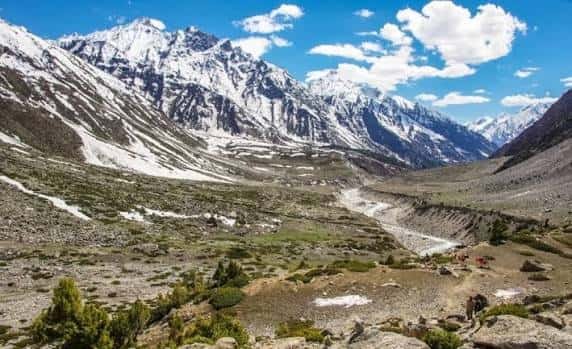
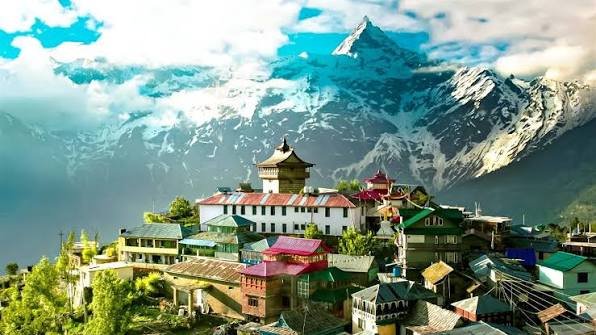
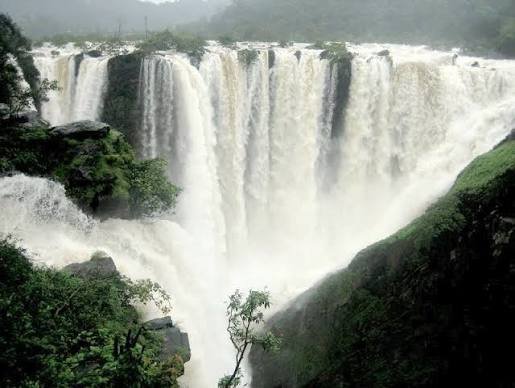
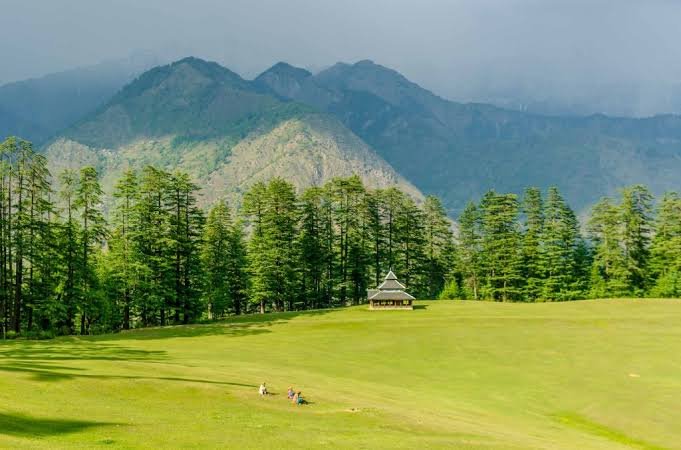
At dawn, before the day’s light fully settles in, Shangarh’s cedar-ringed meadow reveals what draws travellers to this tiny Sainj Valley village in the first place — a wide, sacred stretch of grass with the Kathkuni-style Shangchul Mahadev Temple standing at one edge and the deodar forest of the Great Himalayan National Park rising behind it. Often called the “Valley of Birds,” Shangarh sits at roughly 2,100 metres on the western edge of this UNESCO World Heritage buffer zone, and unlike the increasingly popular Tirthan Valley just across the ridge, it remains genuinely quiet — no crowded cafes, minimal mobile signal, and a road that narrows to almost nothing on the final stretch in.
Shangarh Valley: Quick Facts
| Aspect | Details |
| Location | Sainj Valley, Kullu district, Himachal Pradesh (GHNP buffer zone) |
| Altitude | Approx. 2,100 metres (6,900 feet) |
| Distance from Aut | Approx. 25-35 km |
| Distance from Delhi | Approx. 488-530 km |
| Distance from Kullu | Approx. 50-60 km |
| Nearest Airport | Bhuntar (Kullu), approx. 52 km |
| Best Time to Visit | March to June and September to November |
| Nickname | “Valley of Birds” |
| Key Attractions | Shangchul Mahadev Temple, Shangarh Meadow, Barshanghar/Raila Waterfall, Pundrik Rishi Lake |
| Permit | None to enter village/meadow; GHNP permit only needed for deeper sanctuary treks |
| Accommodation | Small homestays; no formal hotels |
| Ideal Trip Duration | 2-3 nights |
Things to Do in Shangarh
Shangarh’s appeal is concentrated in a small, walkable area, with most attractions sitting within a few kilometres of the village centre.
- Watch Sunrise Over Shangarh Meadow: The village’s signature experience — the wide sacred meadow, deodar forest, and Kathkuni temple architecture together at dawn is considered one of the finest sights in this part of Himachal.
- Visit Shangchul Mahadev Temple: A short walk from the homestays, this temple’s traditional Kathkuni construction (alternating stone and wood) reflects the same architectural heritage found elsewhere in the Banjar and Sainj valleys.
- Walk to Barshanghar Waterfall: Just a few hundred metres from the village, an easy, low-effort stop for those wanting a quick nature walk without committing to a longer trek.
- Catch the Sunset Point: Roughly 2 km from the village, offering panoramic views over the surrounding forest and hills as the light fades.
- Trek to Raila Waterfall and Raila Twin Towers: A longer excursion, roughly 10-13 km away, rewarding more committed walkers with additional scenery beyond the immediate village.
- Visit Pundrik Rishi Lake and Durga Devi Temple: Both sit within a reasonable distance of Shangarh, adding further temple and lake stops to a slower-paced itinerary.
- Birdwatch: Living up to its “Valley of Birds” nickname, Shangarh’s forested surroundings offer genuinely good birding opportunities for those willing to walk quietly and patiently through the trails.
- Use Shangarh as a Base for GHNP Hikes: Niharani, the actual base village for treks into the Great Himalayan National Park, sits just a short distance from Shangarh but has no homestays of its own, making Shangarh the practical overnight base for hikers heading that way.
Best Time to Visit Shangarh Valley
Since Shangarh sits at a moderate altitude within the GHNP buffer zone, its seasonal window closely follows the broader Sainj-Tirthan pattern.
- March to June: A strong spring-to-early-summer window, with green trails, comfortable daytime temperatures, and good conditions for both the meadow walk and longer treks toward Raila or Niharani.
- September to November: Widely considered equally good, if not better for photography, with clearer post-monsoon skies and crisper light over the meadow and surrounding peaks.
- July to August (Monsoon): Generally less recommended, given the already narrow, rougher road into Shangarh becomes more difficult to navigate in wet conditions.
- Winter: Cold and quiet, appealing to travellers specifically wanting a snow-touched version of the meadow, though road access and homestay availability should be confirmed in advance during this period.
How to Reach Shangarh Valley
Reaching Shangarh means first getting to Aut on the Manali highway, then navigating a progressively narrower road through Sainj Valley.
- By Air: Bhuntar Airport near Kullu is the nearest, roughly 52 km away, connected mainly to Delhi and Chandigarh.
- By Road from Delhi: Roughly 488-530 km, typically covered via an overnight bus or drive toward Aut before turning into Sainj Valley — plan this as a full travel day rather than a quick hop.
- By Road from Chandigarh: A shorter stretch via NH21 to Mandi and Aut, following the same Sainj Valley turn-off.
- From Aut: Just before the Aut Tunnel, take the right turn onto the Larji-Sainj road, then follow the Sainj-Siund road toward the GHNP Ropa Forest Complex, continuing through Neuli before the final diversion to Shangarh.
- The Final Stretch: The last 10-15 km from Sainj Village through Ropa to Shangarh narrows considerably; a high-clearance vehicle isn’t strictly necessary in dry weather, but caution and a bit more travel time should be built in regardless.
- Local Transport: Buses and shared cabs run from Kullu to Sainj, though the final leg to Shangarh is best covered by private taxi or a pre-arranged homestay pickup.
What Shangarh Doesn’t Have (And Why That’s the Point)
Understanding what Shangarh deliberately lacks helps set the right expectations before you go, since this is very much a “bring nothing but time” kind of destination.
- No Reliable Mobile Signal: Connectivity is minimal to nonexistent in and around the village, so plan for a genuine break from constant connectivity rather than occasional patchy bars.
- No Formal Hotels: Accommodation is limited to a handful of small homestays, meaning advance booking matters more here than at destinations with broader lodging options.
- No Packed Itinerary Culture: Unlike busier hill destinations, Shangarh isn’t built around a checklist of sights; its value comes from slow mornings at the meadow and unhurried walks rather than ticking off attractions.
- Limited Food Options: A couple of small cafes near the road head cover basic needs, but don’t expect the variety found in Kasol or even nearby Jibhi.
- Skip It If You Need More: Travellers wanting reliable connectivity, varied dining, or a fast-paced sightseeing schedule will likely find Shangarh frustrating rather than restorative — it genuinely rewards those who come specifically for quiet.
FAQs
Q1. Is Shangarh worth visiting if I’ve already been to Tirthan Valley nearby?
Yes — while both sit within the same GHNP-adjacent region, Shangarh offers a distinctly quieter, less-developed experience centred entirely around its meadow and temple, making it a good follow-up trip for those who found Tirthan too developed for their taste.
Q2. Do I need a high-clearance vehicle to reach Shangarh, or will a regular car manage the drive?
A regular car can generally handle the route in dry weather, though the final 10-15 km from Sainj through Ropa narrows considerably, so allow extra time and drive cautiously, especially if conditions are wet.
Q3. Can I use Shangarh as a base for trekking into the Great Himalayan National Park?
Yes — Niharani, the actual trailhead village for GHNP hikes, sits just a short distance from Shangarh but has no homestays itself, making Shangarh the practical overnight base for anyone planning to trek into the park.
Q4. How many days should I realistically plan for a Shangarh trip, given how remote it feels?
A 2-3 night stay works well, allowing time for the meadow at both dawn and dusk, the nearby temple and waterfall walks, and at least one longer excursion toward Raila or a GHNP trail, without feeling rushed given the long drive in and out.