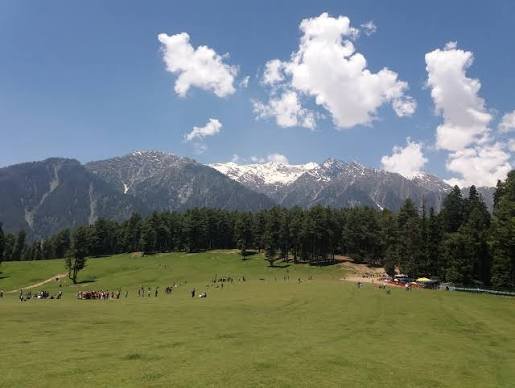
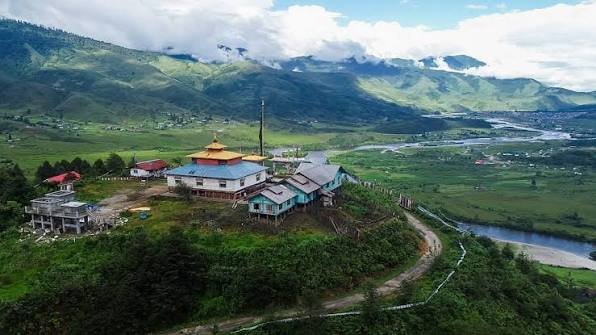
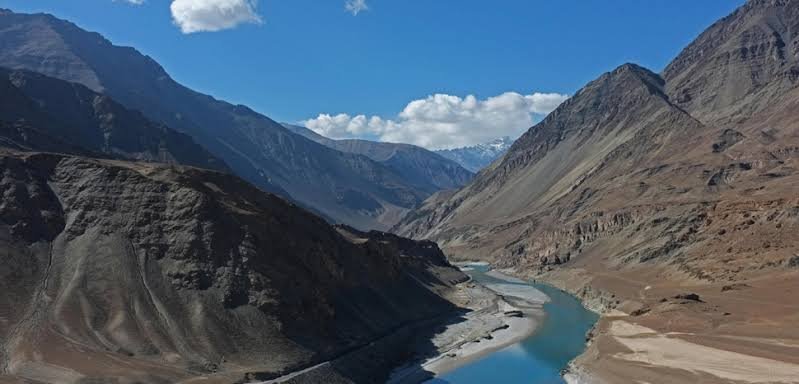
Most travellers heading to Tawang treat Dirang as nothing more than an overnight stop, roughly the halfway mark on the demanding 280 km mountain road from Bhalukpong — yet this West Kameng town, sitting at a comparatively gentle 1,620 metres, has enough of its own draws to justify a proper stay. A 17th-century fort still functions as a living Monpa village, a sulphur-rich hot spring waits down a forested staircase, and apple and kiwi orchards line a valley that stays noticeably milder than Bomdila or Tawang above it. For anyone doing the full Tawang circuit, Dirang deserves more than a single passing night.
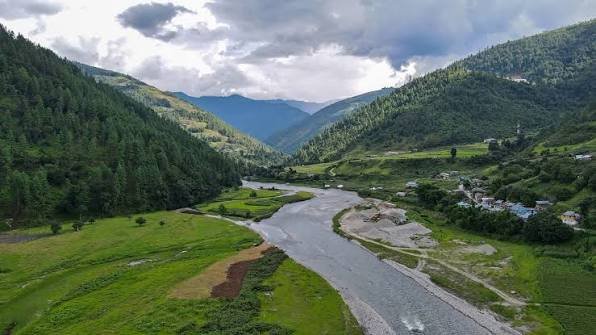
Dirang Valley: Quick Facts
| Aspect | Details |
| Location | West Kameng district, Arunachal Pradesh |
| Altitude | Approx. 1,620 metres (4,900-5,315 feet) |
| River | Kameng (Jia Bharali) / Dirang Chu |
| Distance from Bomdila | Approx. 42 km (1.5 hours) |
| Distance from Bhalukpong (Assam border) | Approx. 140 km (4-5 hours) |
| Distance from Tawang | Approx. 140 km (5-6 hours, via Sela Pass) |
| Nearest Airport | Tezpur or Guwahati, Assam |
| Local Communities | Monpa (predominant), Aka, Sherdukpen, Tibetan |
| Permit Required | Inner Line Permit (mandatory) |
| Best Time to Visit | March to May and September to November |
| Key Attractions | Dirang Dzong, Hot Water Spring, Kalachakra Gompa, Sangti Valley |
| Known For | Living medieval fort-village, sulphur hot spring, apple/kiwi orchards |
| Ideal Trip Duration | 1-2 nights |
How to Reach Dirang Valley
Since Dirang sits directly on the main Bhalukpong-Tawang highway, reaching it is straightforward as long as you’re already on this well-travelled corridor.
- By Air: Tezpur and Guwahati in Assam are the nearest airports, with Tezpur generally offering a shorter onward road journey into Arunachal Pradesh.
- By Road from Bhalukpong: The Assam border entry point for West Kameng, from where it’s roughly 140 km (4-5 hours) along the Bhalukpong-Tawang highway to reach Dirang.
- By Road from Bomdila: A much shorter 42 km stretch (about 1.5 hours), making Bomdila and Dirang the two standard overnight halts most travellers use on the way to and from Tawang.
- By Road from Tawang: Roughly 140 km (5-6 hours), including the demanding Sela Pass crossing, so this leg of the journey requires an early start regardless of direction.
- State Transport Connectivity: Arunachal Pradesh State Road Transport Corporation buses connect Dirang with Bhalukpong, Tezpur, Itanagar, Guwahati, and Shillong, offering a budget alternative to hiring a private taxi.
- Permits: An Inner Line Permit is mandatory for all Indian visitors entering Arunachal Pradesh, arranged online in advance or at the Bhalukpong checkpoint.
Best Time to Visit Dirang Valley
Thanks to its comparatively lower elevation, Dirang enjoys milder weather year-round than either Bomdila or Tawang, though a few windows stand out.
- March to May (Spring): Pleasant daytime temperatures (15-20°C) with cool nights, coinciding with vibrant flora and blooming orchards — also a strong window for combining Dirang with a Tawang Monastery visit further along the circuit.
- September to November (Autumn): Moderate temperatures allow for deeper exploration of both cultural and natural attractions, with clearer skies than the monsoon months.
- October to March (Winter-leaning): Cold mornings and evenings, occasionally dipping near freezing, but crisp, clear skies that are excellent for photography of the surrounding peaks.
- July to September (Monsoon): Generally less favourable, with heavier rainfall affecting road conditions on the already winding route between Bomdila and Dirang.
- A Year-Round Option: Given its milder climate compared to higher points on the Tawang circuit, Dirang remains reasonably visitable across most of the year, making it more flexible than many other Arunachal Pradesh stops.
Things to Do in Dirang Valley
Dirang’s attractions combine living heritage, natural hot springs, and Buddhist culture within a compact, easily walkable area.
- Explore Dirang Dzong: A 17th-century fort originally built for regional protection and later used as a prison, now serving as an active residential area for the local Monpa community — genuinely a “living medieval village” rather than a preserved ruin.
- Soak in the Hot Water Spring: Located about 1-1.5 km from town (reached via a stone staircase of roughly 500 steps through eucalyptus and pine), this sulphur-rich spring is divided into a clear bathing section and a darker, murkier section locally considered to hold greater spiritual “power.”
- Visit Kalachakra Gompa: A significant Buddhist site reflecting Dirang’s deep Mahayana Buddhist and Tibetan cultural roots.
- Tour Thupsung Dhargye Ling Monastery: Also known as Dirang Monastery, this is an important seat of Buddhist learning and community life in the region.
- Visit the National Research Centre on Yak: A distinctive stop offering insight into high-altitude livestock research specific to this Himalayan region.
- Walk Through Apple, Kiwi, and Apricot Orchards: Dirang’s orchards add a softer, agricultural dimension to the valley, best enjoyed as a daytime add-on rather than a standalone stop.
- Day Trip to Sangti Valley: Just 13-15 km away, this neighbouring valley is the wintering ground of the black-necked crane, migrating from Tibet each November and returning with young in April-May.
Structuring Your Time in Dirang
Since Dirang offers more than most travellers initially plan for, how you allocate your time here genuinely changes the experience.
- If You Have Only Half a Day: Focus on Sangti Valley for the strongest scenic payoff, paired with one easy complementary stop like the Hot Water Spring or Dirang Dzong.
- If You Have One Full Day: The strongest combination runs Sangti Valley first, followed by Dirang Dzong, then either the Monastery or Hot Springs depending on whether you want the day to feel more cultural or more restorative.
- If You’re on a Tight Transit Stop: Skip the orchards and slower-paced stops; prioritize Dirang Dzong for heritage value and the Hot Springs for one easy, worthwhile detour before continuing toward Sela Pass.
- Practical Comfort Note: The Dzong settlement includes uneven paths, stone walkways, and elevation changes, so comfortable walking footwear matters more here than at typical drive-up attractions.
- Photography Timing: Late afternoon generally offers the most attractive light on the traditional Monpa architecture within and around the Dzong.
- Where to Stay: Base yourself near Dirang town for easy access to the Dzong, Monastery, and local dining; choose Sangti Valley accommodation instead if scenery and a slower pace matter more than proximity to the main attractions.
FAQs
Q1. Is Dirang worth stopping at for more than just an overnight halt on the way to Tawang?
Yes — while most travellers treat it as a single-night stop, Dirang’s combination of the living Dzong village, hot springs, and nearby Sangti Valley genuinely rewards at least one full day rather than a rushed evening arrival and early morning departure.
Q2. Do I need a separate permit for Dirang, or does my general Arunachal Pradesh ILP cover it?
The standard Inner Line Permit for Arunachal Pradesh, obtained online or at the Bhalukpong checkpoint, covers Dirang and the broader West Kameng district as part of the standard Tawang circuit travel.
Q3. Is the hot water spring worth the climb down, especially after a long day of mountain driving?
Most visitors find it genuinely worthwhile — the roughly 10-15 minute walk through eucalyptus and pine leads to a sulphur-rich spring believed to have therapeutic properties, making it a popular and refreshing break specifically after long stretches on the Tawang highway.
Q4. Should I visit Dirang on the way to Tawang, on the return, or both?
Both directions work, since Dirang and Bomdila serve as the two standard overnight halts on this route — some travellers deliberately spend a fuller day in Dirang on one leg (say, the outbound journey) and keep the return stop brief, rather than splitting attention evenly across both visits.